
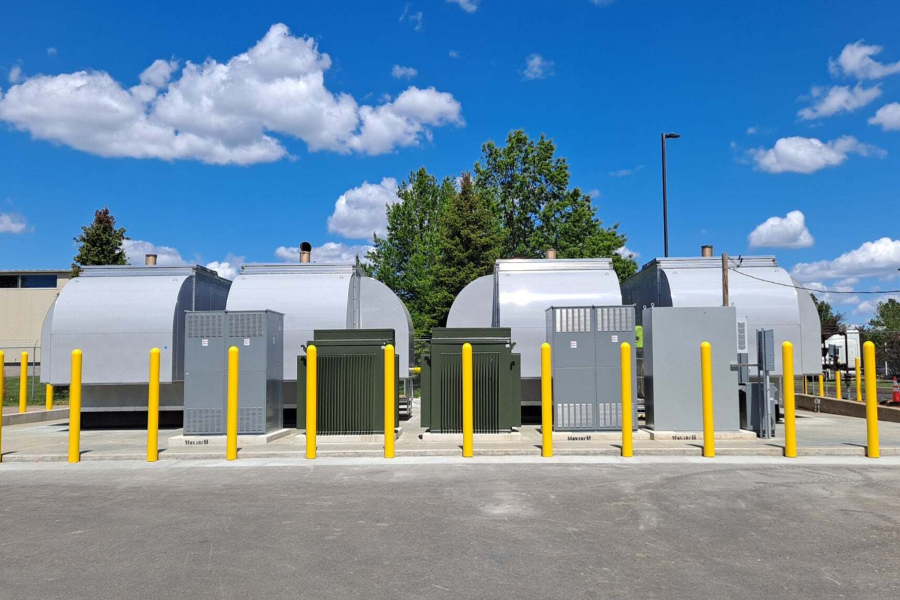
How Heat Recovery Supports Microgrids and Energy Resilience in Healthcare
As healthcare facilities face increasing grid instability, rising energy costs, and stricter reliability requirements, microgrids combined with heat recovery systems are becoming essential tools for long-term energy resilience.
Hospitals and healthcare campuses cannot afford power interruptions. From life-saving medical equipment to climate-controlled patient spaces and data infrastructure, energy reliability is mission critical. Heat recovery plays a key role in strengthening healthcare microgrids by capturing waste heat and transforming it into usable thermal energy.
At Penncat Energy, we support healthcare organizations with critical power strategies designed to improve uptime, efficiency, and long-term resilience.
Understanding Heat Recovery in Healthcare Facilities
Heat recovery—often implemented through Combined Heat and Power (CHP) systems—captures excess heat generated during electricity production and repurposes it for hospital operations. According to the EPA’s overview of CHP benefits for healthcare facilities, hospitals using CHP can significantly improve efficiency while maintaining operations during grid outages.
Common hospital uses for recovered heat include:
The DOE’s CHP fact sheet for hospitals highlights that facilities with continuous thermal demand—like hospitals—are ideal candidates for heat recovery systems.
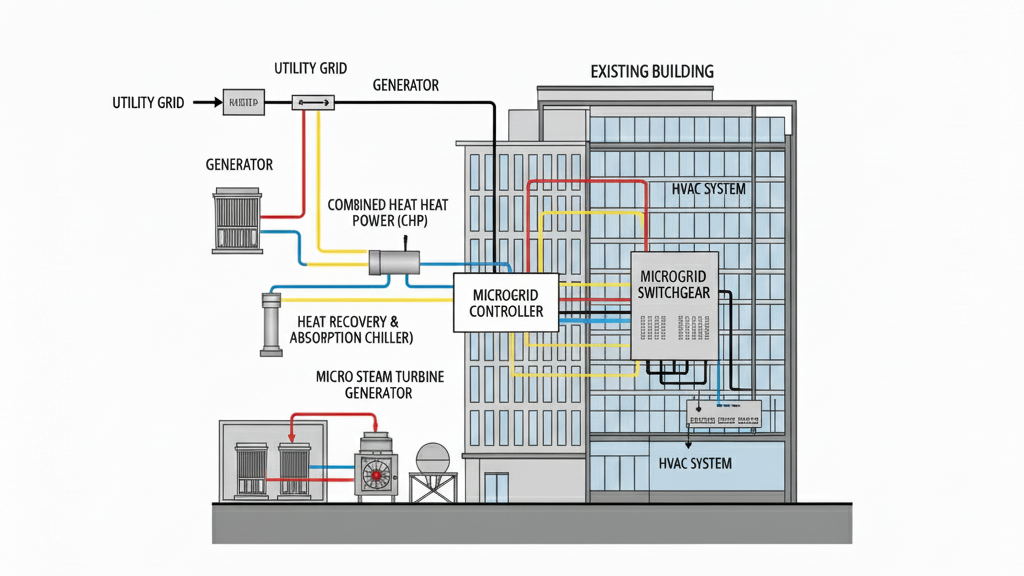
How Heat Recovery Enhances Microgrid Performance
1. Maximizing Energy Efficiency
CHP systems with heat recovery can achieve up to 80% overall efficiency, far exceeding traditional generation methods. These gains are maximized when CHP is paired with properly engineered generators, switchgear, and controls found in modern critical power and microgrid solutions.
2. Supporting Islanded Operations
Federal research emphasizes CHP’s role in energy resilience, particularly when integrated into microgrids serving critical healthcare infrastructure. CHP-enabled microgrids allow hospitals to operate independently from the utility grid during outages, maintaining power to essential systems.
3. Reducing Grid Dependence
A real-world hospital microgrid case study demonstrates how CHP-based microgrids can reduce emissions while maintaining uninterrupted patient care—even during extended grid disruptions.
Meeting Healthcare Compliance and Sustainability Goals
Independent research, including Pew research on CHP and hospital resilience , shows that onsite generation improves emergency preparedness during extreme weather events.
Additionally, Oak Ridge National Laboratory’s resilience analysis confirms that CHP systems improve operational continuity for hospitals during extended grid disruptions.
Build a More Resilient Healthcare Energy Strategy
A microgrid with integrated heat recovery can deliver reliable power, thermal efficiency, and long-term resilience for healthcare facilities.
© Penncat Energy | Microgrids • Heat Recovery • Critical Power Solutions